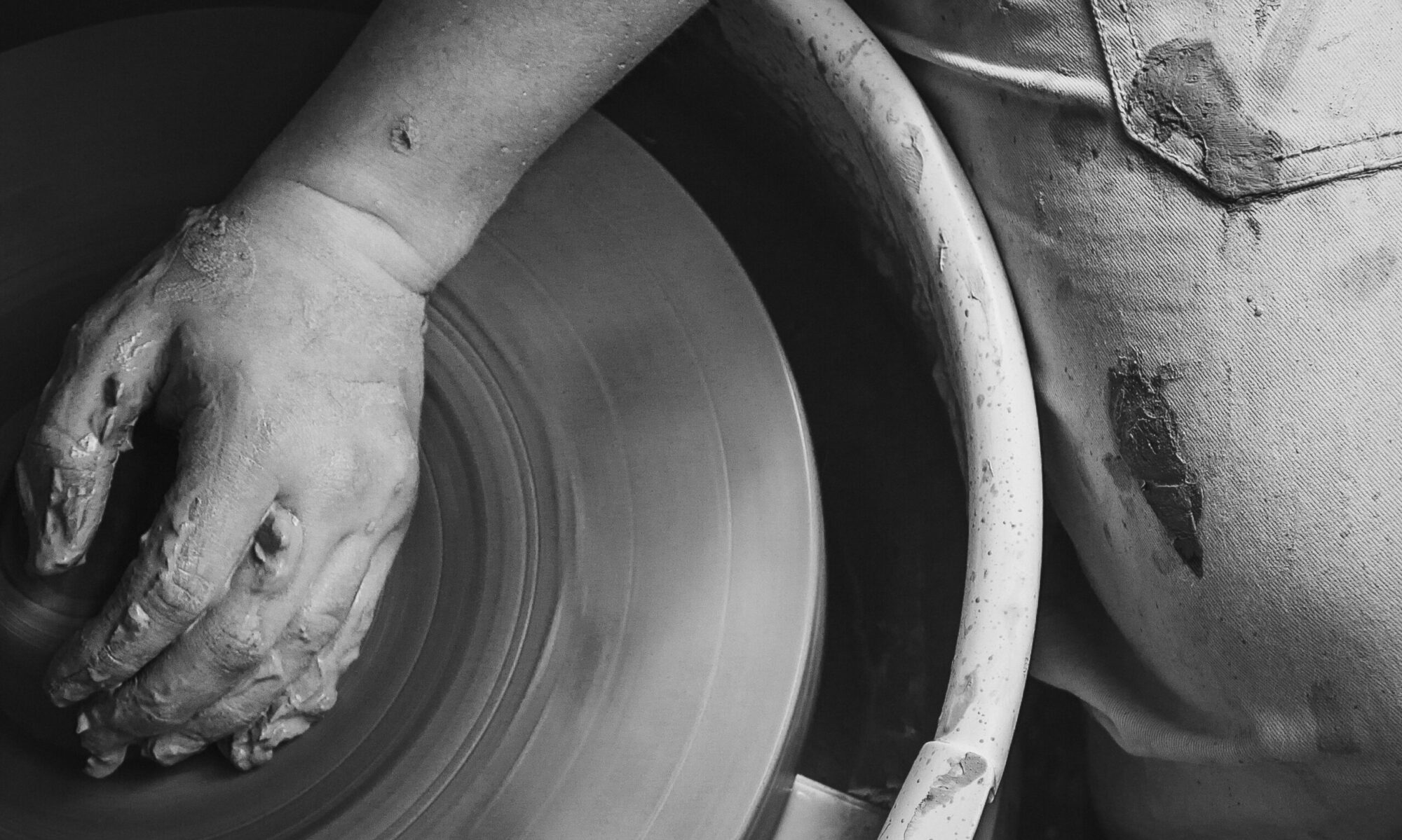
Formal Elements Image Sequence + Analysis
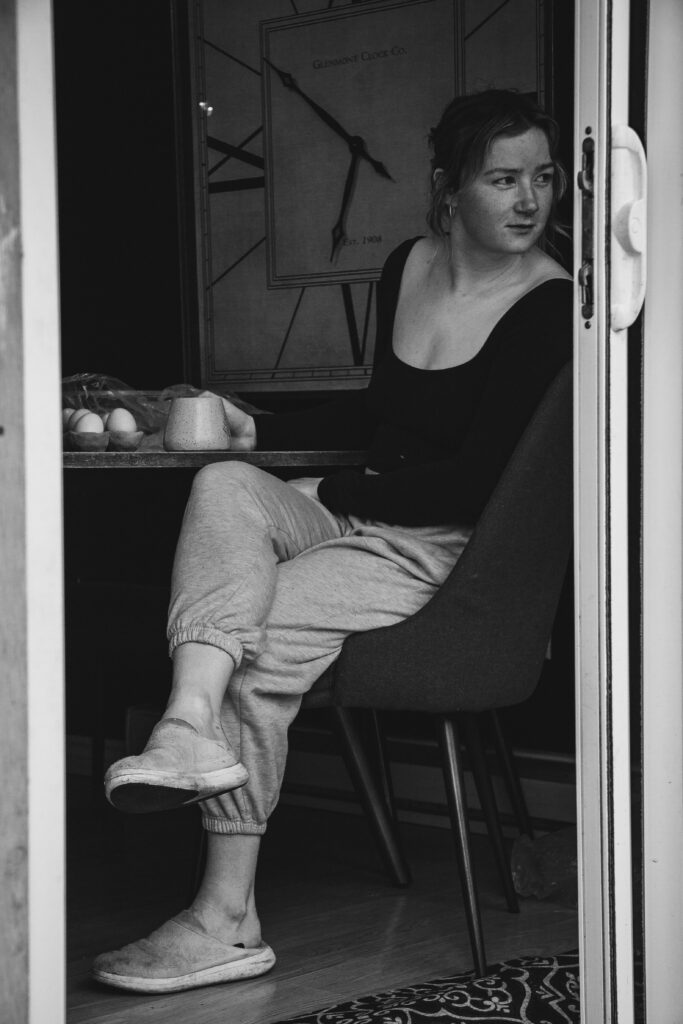
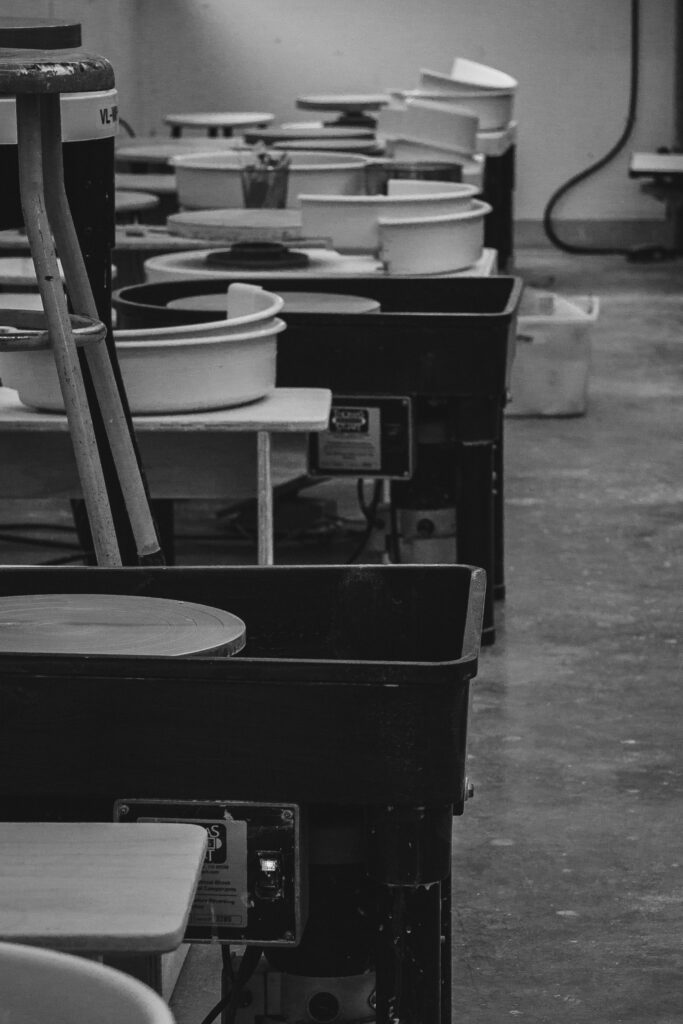
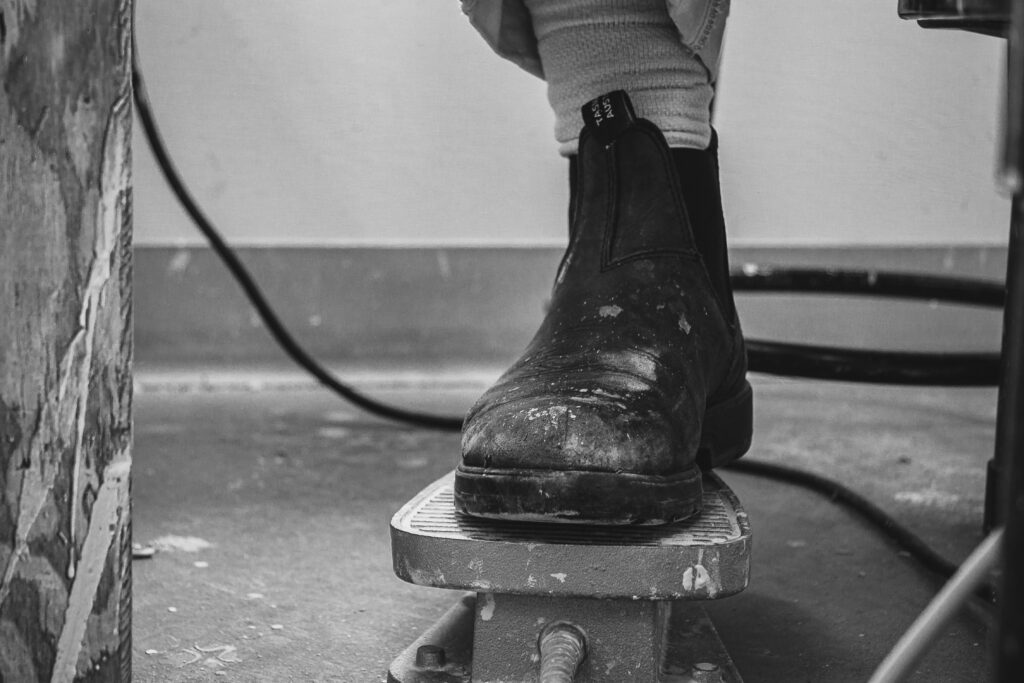
Analysis
Repetition
The sequence uses repetition to emphasize the orderly and serene atmosphere of the pottery studio. The visuals of neatly organized spinning wheels and stools placed in order, hint at a structured environment. The viewer is gradually introduced to this setting in a calm, rhythmic fashion, by keeping the subject matter in groupings of ones and twos, thus allowing the eye to move smoothly across the images. The second image captures repetition in depth, presenting a series of working benches stretching back into the studio. This sense of depth invites the viewer to observe and connect with the quiet moment before the studio becomes busy.
Perspective
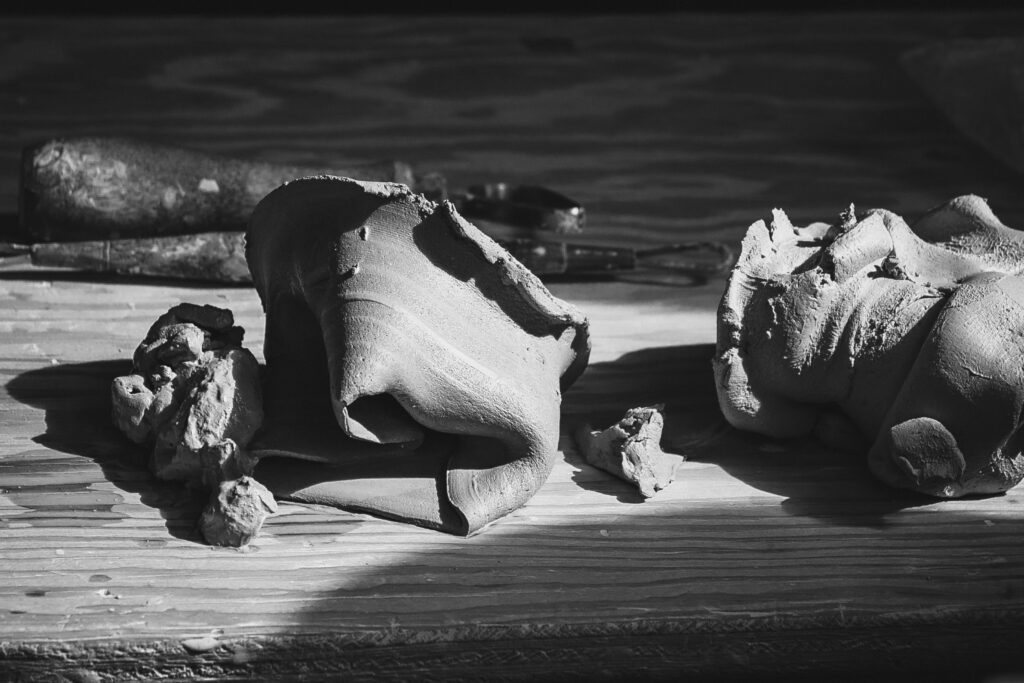
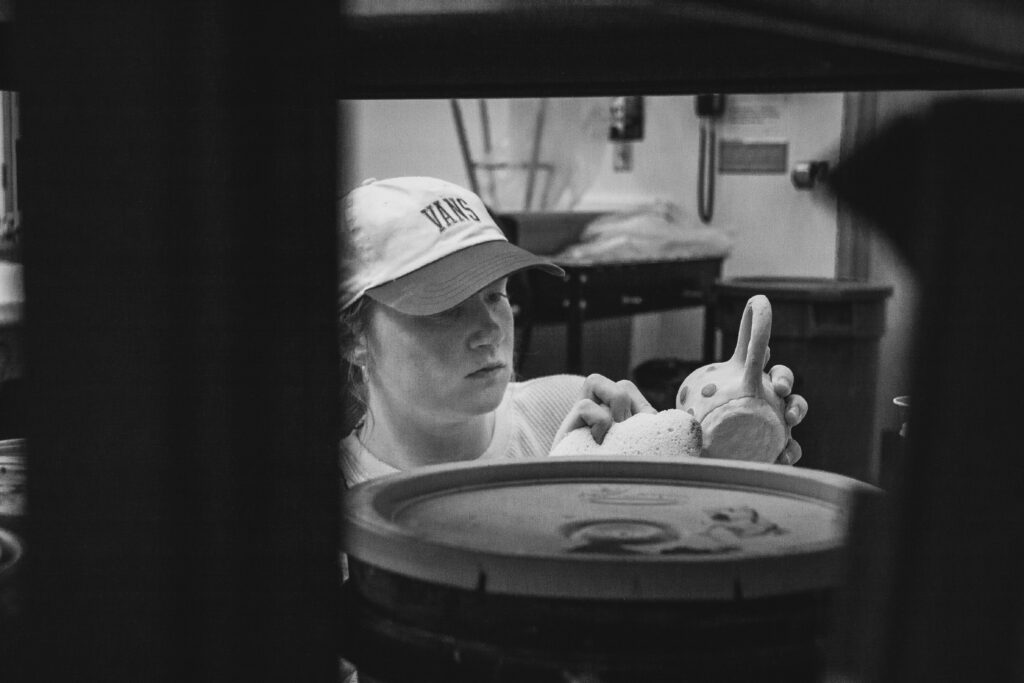
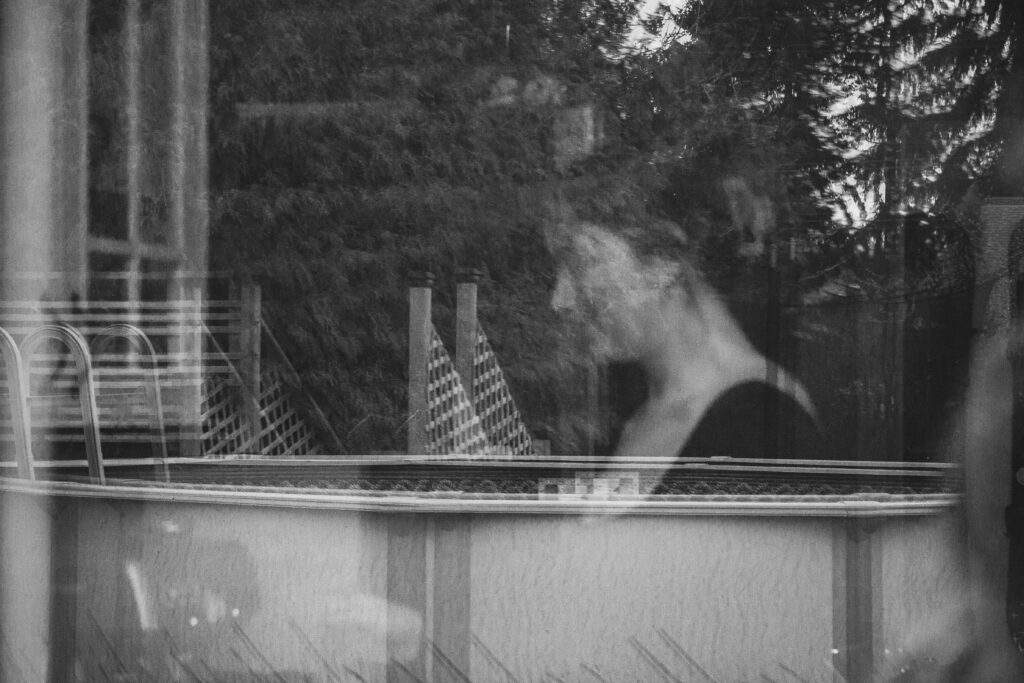
The chosen perspective frames the sequence as though we are a quiet observer looking into the main subject’s life. One shot captures the potter through the paint rack, while another looks down at unfinished clay pieces from above. This viewpoint brings a sense of curiosity and intimacy as if the viewer is peeking into a private space. The angles invite the viewer to feel as though they’re looking in from the outside, observing the potter’s work process without full access to their world. The subtle foggy reflections in the glass suggest that there is more beyond what meets the eye, adding mystery to the setting.
Texture
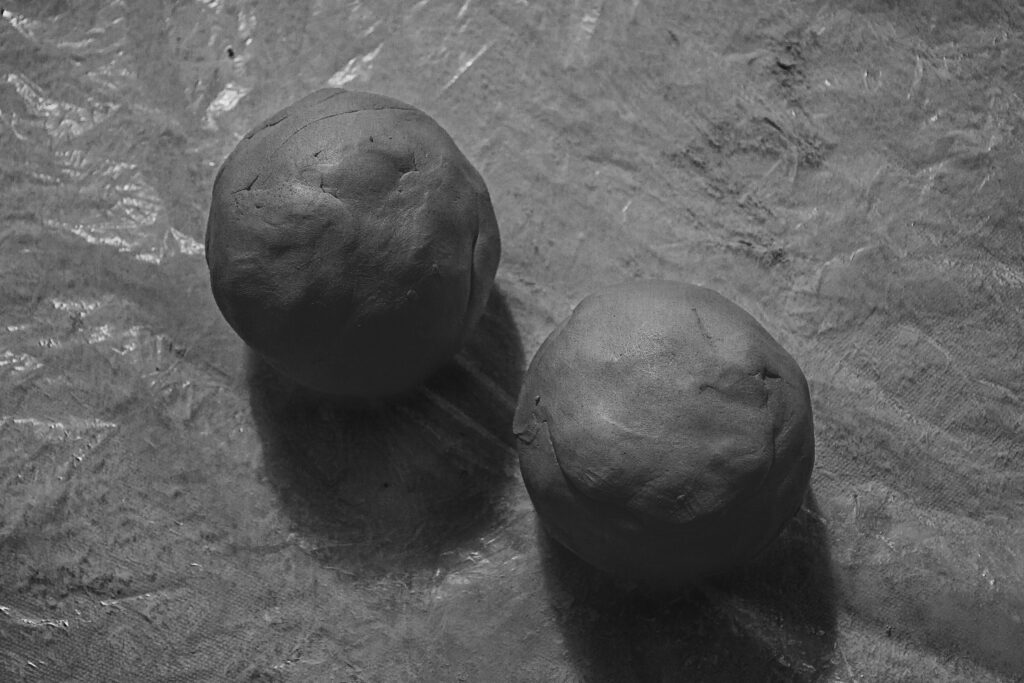
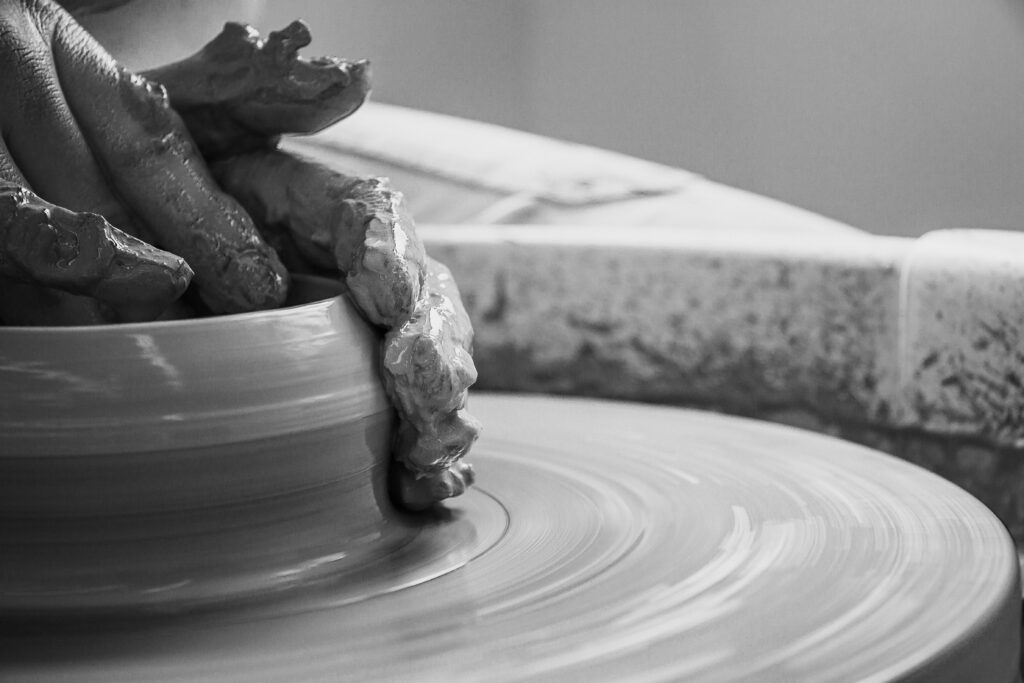
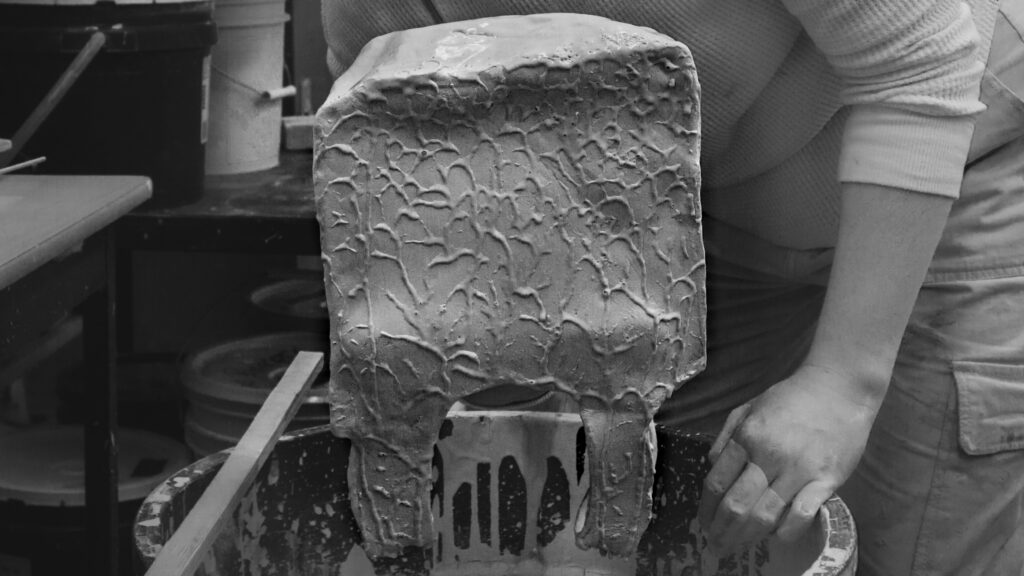
The textures throughout the sequence add a tangible quality to each frame, connecting the viewer with the materials. The gritty, grainy final edits heighten this effect, while the images capture the contrast between rough, clay-covered tools and the smoother pottery pieces. The texture is explored across different surfaces: the smooth dining room floor to the rugged and dirty studio floor, the spinning wheel, and the clay-streaked pedal. The viewer is drawn into a tactile experience, allowing them to “feel” the space through the visual representation of texture.
Colour
The greyscale palette enhances the formal elements—such as texture, movement, perspective, and depth—by stripping away distractions, creating a unified and seamless visual experience. The lack of colour evokes a timeless, almost nostalgic quality that emphasizes the gritty textures, grounding the series in a raw and authentic atmosphere. This choice of monochrome not only ties the images together but also heightens the mood of solitude and introspection, allowing each image to feel like a preserved, quiet memory.
Movement
Movement in this sequence unfolds not only through physical actions but also through a narrative journey. The first image begins at the potter’s home, capturing them in casual morning attire with an open glass door, inviting the viewer inside. From there, the sequence guides us into the studio, where blurred lines at the spinning wheel and subtle gestures capture the motions of the potter’s craft. Each frame flows naturally into the next, following the potter through a day of focused work. The final image returns to the potter’s home, but now viewed from the outside through a blurred window. This hazy perspective creates a sense of movement and hints at the idea that things may not appear as they truly are, particularly when viewed from a distance. The blurred view suggests an element of mystery and the unknowable nature of another person’s world, emphasizing that the potter’s life, like their craft, has layers that are only partially visible to an outside observer.